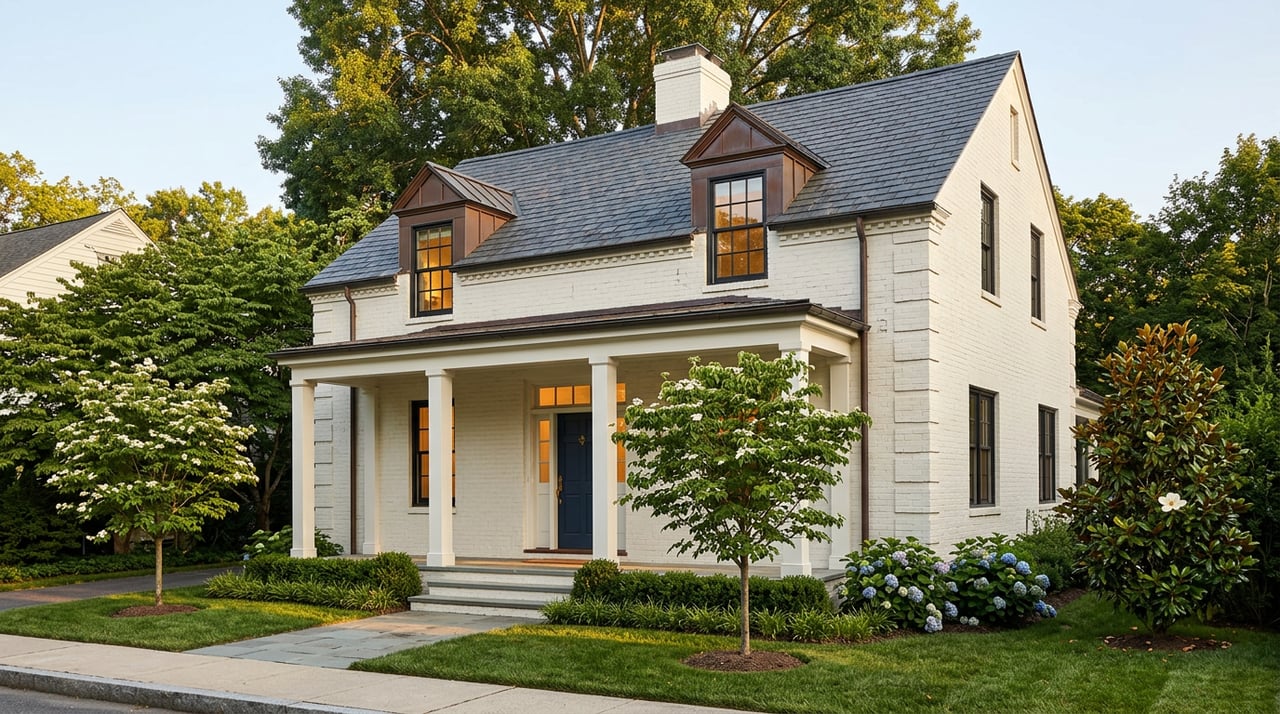
The obvious story of Arlington in mid-2026 is the one every portal tells you: prices up, days on market down, bidding still competitive. The interesting story is why the townhouse line on that chart is now steeper than the single-family line, and why the answer sits in a Virginia Supreme Court docket rather than an MLS report.
If you are comparing Arlington to Alexandria, Falls Church, or a Tysons-adjacent zip code this summer, the mechanism worth understanding is this: the ordinance that was supposed to give Arlington a wider middle of the market has spent three years in litigation, and the pipeline it produces is smaller and less certain than the headlines about "Missing Middle" suggest. That gap between promise and delivery is showing up in what you can bid on.
What the May 2026 numbers actually say
Across the county's May 2026 closings, single-family homes averaged $1.553 million, up 6.5% year over year, with a median of six days on market. Townhouses averaged $1.024 million, up 7.5%, selling in a median of seven days at 101.8% of original list. Condos ran $550,000, up 10.5%. Every product type gained, but the two categories closest to what a middle-housing program is supposed to deliver, townhouses and condos, gained faster than detached homes.
That is the number that contradicts the reflexive "land is the scarce thing" story. In a built-out county, land usually pulls detached prices upward the hardest. When attached and stacked product outpaces it, something is compressing supply on the attached side specifically. In Arlington, that something has a name.
The 58-permit ceiling, and what it produced
Arlington's Expanded Housing Options ordinance, adopted in March 2023 and effective July 1, 2023, allows up to six units on lots in the R-20, R-10, R-8, R-6, and R-5 districts, subject to the same height, setback, and size limits as a detached home. It also caps new EHO permits at 58 per year countywide, distributed across the map. The full text and permit tracker live on the county's EHO page.
Fifty-eight is a small number against a county that approved more than 4,500 new homes in 2025 and reports that only 11% of its housing stock has more than two bedrooms. It gets smaller in practice. In FY 2024, the county approved 37 EHO zoning permits, the preliminary step before a building permit. By late 2024, of 45 total EHO permits approved since adoption, only twelve had reached demolition and seven had reached building permits before a Circuit Court decision briefly voided the ordinance.
"If you have a previously approved EHO permit, it is now void, or simply put, no longer exists." — Samia Byrd, Director of Arlington's Department of Community Planning, Housing & Development, in an October 2024 letter to developers after the trial court ruling.
That letter is the piece of local history that shapes today's market. The Court of Appeals reversed the trial court in June 2025 and reinstated the ordinance on procedural grounds. On May 19, 2026, the Virginia Supreme Court agreed to hear the appeal filed by Neighbors for Neighborhoods, the homeowner plaintiff group. The court did not halt EHO development, so the county continues issuing permits, but the underlying validity question is unresolved and a Neighbors for Neighborhoods spokesperson expects a return trip to trial court within three to six months.
For a buyer, the practical read is that new attached inventory is arriving at a rate the market can absorb in a single weekend, and the builders producing it are pricing in legal risk.
Why townhouses outran detached homes
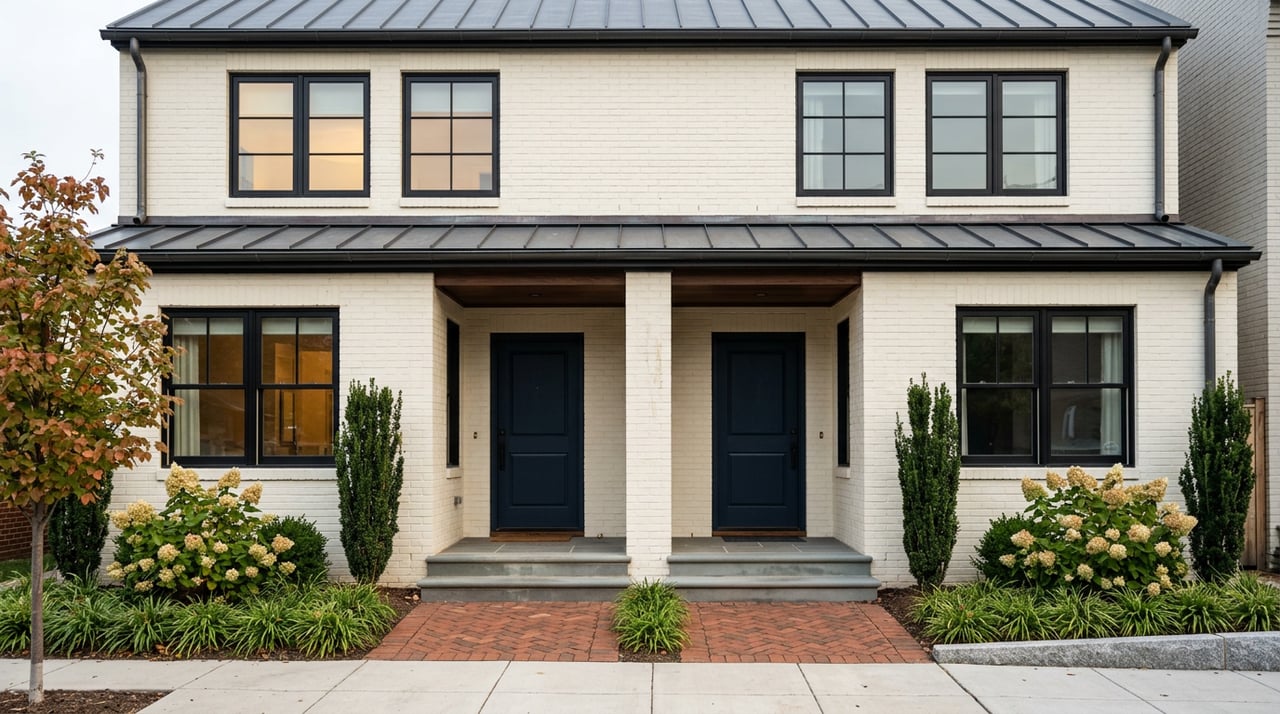
Take the townhouse line first. When you buy an Arlington townhouse in July 2026, you are usually buying an existing one. The EHO pipeline has not added enough units to matter yet, and the ones it has added are custom-built duplexes and multiplexes priced closer to the detached market than to a 1990s townhome. Demand for anything under $1.2 million with a garage and a yard is being funneled into the same pool of resale townhouses that existed before the ordinance passed. Seven-day median DOM and 101.8% of list price is what that funnel looks like.
Detached homes, by contrast, still carry the land-value story. In a built-out county, the lot is doing much of the work, and the buyer knows it. Buyers move quickly on a well-located detached listing because the land will hold value even when the structure needs work. Prices rose 6.5%. But detached homes did not have to absorb the demand that would otherwise be going into a healthier middle segment. Townhouses did.
Condos are the other pressure valve. The 10.5% jump on the $550,000 average is the clearest signal that buyers who wanted a townhouse and could not win one are trading down into the attached-but-stacked category rather than leaving the county.
What you are actually bidding on this summer
Three scenarios are worth thinking through before you write an offer.
- An existing rowhouse or 1990s-era townhouse. You are competing in the tightest segment on a percentage basis. Sellers know the comps. Escalation clauses are common. Inspection contingencies get shorter. This is where a disciplined pre-list conversation with your agent about walk-away price matters more than any staging tip.
- A newly built EHO duplex or multiplex. You are buying into an unresolved legal question. The Court of Appeals ruling that put EHO back in play addressed procedure, not the merits. Your title insurer and lender will underwrite the property as it stands, but a future ruling on the ordinance's validity could affect resale narrative for units built under a contested framework. Ask your agent to pull the specific EHO permit history for the lot. The county's tracker is public.
- A resale condo in Rosslyn, Ballston, or Crystal City. The 10.5% year-over-year gain reflects both spillover demand and a shifting rental picture, with Amazon's HQ2 buildout stretching later than the original 25,000-job pace and office-to-residential conversions in the pipeline. Condo fees, reserve studies, and special assessment history do more work in your decision than the neighborhood label.
The through line across all three is that the "Missing Middle will fix the price problem" thesis, right or wrong on the merits, is not describing the market you are shopping in this summer.
The state-level wildcard
While the EHO case sits with the Virginia Supreme Court, the 2026 General Assembly passed a slate of housing bills that could reshape the pipeline from a different direction. Bills covered by ARLnow's March 2026 recap include HB 594, authorizing localities to administratively approve affordable housing developments without a full rezoning; HB 1279 and SB 388, allowing faith-based and tax-exempt nonprofits to redevelop their own property for affordable housing without rezoning; administrative approval for accessory dwelling units; and limits on parking requirements along transit lines.
If Arlington adopts the enabling ordinance for HB 594, projects like the 90-unit Clarendon Presbyterian and True Ground Housing Partners senior proposal in Lyon Village, which stalled for five years and was priced out by construction costs, would have a faster path. That does not change your July 2026 offer, but it changes what a five-year hold looks like.
FAQ
Can I still buy a newly built EHO home while the case is on appeal? Yes. The Virginia Supreme Court's May 19, 2026 order accepting the appeal did not halt EHO development, and the county continues to process permits. The unresolved question is legal validity, not current buildability.
Does the litigation affect my mortgage or title? Lenders and title insurers underwrite on the ordinance as it stands. Talk to your lender and title company early about the specific property, and ask your agent for the parcel's permit history.
Is Arlington a buyer's market anywhere right now? Not on the data. Every product category posted price growth in May 2026 and median days on market are in single digits for detached homes and townhouses. Leverage comes from preparation, not from the calendar.
If you are weighing an Arlington offer this summer and want a read on what the specific block, permit history, and comp set are telling you, Gayhardt Partners works these decisions one property at a time. Let's Connect.