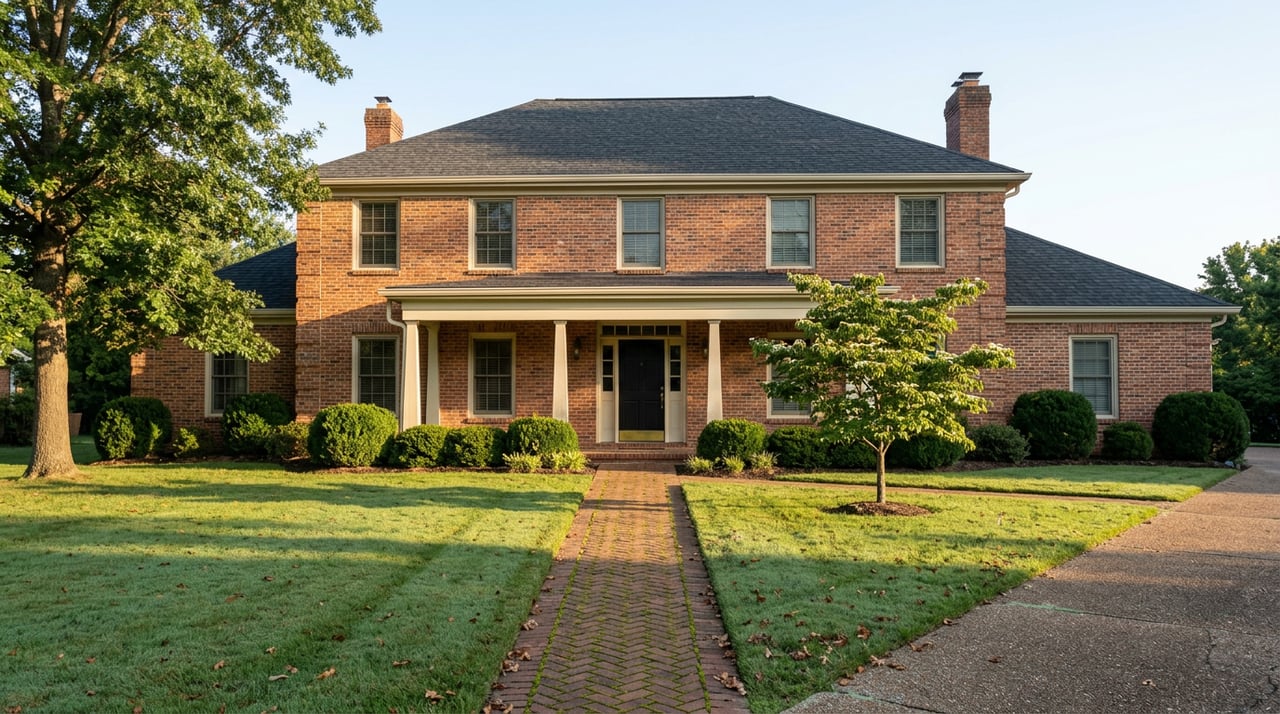
A Montgomery County homeowner spent part of this summer doing something most people never bother to do: he pulled his own property tax history back to 2012 and lined it up year by year. The number he found for 2026 was a 25 percent jump over the prior year. When he broke down where the increase actually came from, about two-thirds of it traced back to a single credit the County Council had just voted to zero out, and roughly a third came from the county's new property reassessment. Nothing about his house had changed. The rules around it had.
That gap between what a house is worth on paper and what its owner actually pays is not trivia. It is the reason Montgomery County is one of the only places in Maryland that legally requires sellers to hand buyers an estimate of next year's tax bill before a contract is signed. Most home shoppers assume the seller's current tax bill is a reasonable stand-in for what they'll owe. In Montgomery County that assumption has quietly become less true, and 2026 is the year the gap widened the most.
The disclosure law nobody outside the county has heard of
Montgomery County's property tax disclosure requirement has existed since 2008, when the County Council passed Bill 24-07 requiring sellers to estimate and disclose the property tax a buyer would owe in the first full year after purchase. The county built an online calculator, still maintained by the Office of Consumer Protection, specifically so sellers and agents could generate that estimate without guesswork.
The idea behind it was straightforward. County Executive Isiah Leggett put it plainly when the law took effect:
"A home buyer should receive the most accurate information possible when buying a home."
The problem the law was built to solve is structural, not seasonal. Maryland's Homestead Tax Credit caps how much a homeowner's taxable assessment can grow in a single year, and Montgomery County sets that cap at 10 percent, the maximum the state allows. If your home's assessed value jumps 20 percent in a reassessment cycle, the credit spreads that increase out so you're only taxed on 10 percent of it that year, with the rest phased in over subsequent cycles. That protection belongs to the person who already lives there. A buyer moving in this year gets none of it. The Homestead Credit explicitly does not apply in the first year after a purchase, so a new owner's first bill reflects the property's full current taxable value with no cushion at all.
That is the mechanism the disclosure exists to surface: the seller's tax bill and the buyer's tax bill are calculated under two different sets of rules, even on the same house, in the same year.
What changed in 2026, and why it stacked
Two things happened almost simultaneously this year, and each one independently widened the gap the disclosure law was built to catch.
First, the state's routine reassessment. Maryland reassesses roughly a third of the properties in every county each year on a rotating cycle. For 2026, it was Montgomery County's Group 2 properties, covering roughly 94,000 residential accounts across Bethesda, Silver Spring, Potomac, Wheaton, and Olney, that got their new notices, mailed December 30, 2025. The average increase in residential value for that group came in at 12.6 percent, slightly below the statewide residential average of 13.2 percent but still enough to meaningfully move next year's tax math for anyone in those areas.
Second, and more consequential for the disclosure gap specifically, the County Council voted to eliminate the Income Tax Offset Credit for Levy Year 2026. That credit, which appeared on tax bills as a straightforward line item labeled "County Property Tax Credit," had been worth $692 in the prior levy year. The Council reduced it to zero. County Executive Marc Elrich, who opposed the change, did not mince words about what it amounted to:
"This is a tax increase no matter what the county said."
The county's own Department of Finance confirmed the average homeowner would see roughly a $23 monthly increase from rising assessments alone, separate from the ITOC loss. Put those two forces together and you get the homeowner from the opening of this piece: a 25 percent year-over-year bill increase, with the ITOC elimination doing most of the work and the reassessment doing the rest.
Here is why that matters for anyone buying or selling this year. The seller's current bill already reflects both the Homestead Credit's growth cap and whatever remained of the old credit structure. The buyer's estimated bill, the one the county now legally requires the seller to disclose, reflects neither. It is calculated on the full reassessed value with no phase-in, and if the ITOC ever returns in a future levy year, a new owner only receives it if they have a Homestead Tax Credit application on file with the State Department of Assessments and Taxation by May 1, 2027, so it can appear on bills starting July 1, 2027.
| Existing owner-occupant | Buyer in year one | |
|---|---|---|
| Homestead Credit growth cap | 10% per year, applied | Not applicable in first year |
| Income Tax Offset Credit, LY26 | $0 (was $692 in LY25) | $0, and unavailable until a Homestead application is on file |
| Basis for current bill | Phased-in assessed value | Full current assessed value |
That is not a rounding difference. It is the reason the disclosed number on a Montgomery County listing can look meaningfully larger than the number the seller has actually been writing a check for.
Who the law doesn't cover
The disclosure requirement is a county ordinance, and county ordinances don't automatically reach every incorporated town inside the county. When the law was written, it explicitly did not apply within the municipalities of Barnesville, Kensington, Poolesville, or Rockville, since those towns can adopt their own consumer protection rules if they choose to. If you're comparing a listing in unincorporated Montgomery County against one inside Rockville city limits, don't assume the same disclosure obligation is in play on both.
What this actually means before you sign anything
For a seller, the practical takeaway is not to fear the disclosure form. It is to run the county's estimator before you list, not after an offer comes in. A buyer who sees an accurate number in the listing paperwork early is a buyer who has already priced it into their offer. A buyer who discovers it late, during attorney review or after a mortgage application, is a buyer who may walk, renegotiate, or simply lose trust in the rest of the file.
For a buyer, the number on that disclosure form deserves more weight than the seller's current tax bill, not less. Ask whether the property fell into this year's Group 2 reassessment. Check whether you're purchasing inside one of the four exempt municipalities, where you may need to ask directly rather than rely on a county-mandated form. And once you close, file your Homestead Tax Credit application with SDAT promptly. It is a one-time filing, it does not need to be renewed annually, and missing it means missing out if the ITOC or a similar credit is restored in a future levy year.
A few questions worth settling before you're at the settlement table
Does this disclosure apply to condos and townhomes, or only detached homes? The requirement applies to residential property sales generally, not just single-family detached homes, so condos and townhomes in unincorporated Montgomery County are covered.
Is the disclosed number legally binding, or just an estimate? It's an estimate based on current tax rates and the property's assessed value at the time the materials are produced. Actual future rates and assessments can still move before the bill is issued.
If I'm buying in Rockville or Kensington, does anything protect me the way the county disclosure does? Not automatically through the county ordinance. Ask your agent or the listing agent directly whether the municipality has its own consumer protection requirement in place, since the county law does not reach those towns.
The tax line on a Montgomery County listing is one of the few numbers in a transaction that the county itself insists get spelled out in writing before you sign. This year, more than most, it's worth reading closely rather than skimming past. If you're weighing a purchase or a sale anywhere in Montgomery County and want that number run accurately before it becomes a surprise, Gayhardt Partners is glad to walk through it with you. Let's Connect.